

16
OctArtificial intelligence is becoming more sophisticated, but one challenge continues to slow down machine learning development: identifying which data deserves human attention. Organizations often collect enormous amounts of images, videos, text, audio recordings, and sensor data. Yet labeling every available sample can be expensive, time-consuming, and unnecessary. Some samples offer very little new information, while others can […]

14
OctDeploying production-grade machine learning models requires high volumes of precisely tagged data. As computer vision, natural language processing (NLP), and multimodal AI systems advance, managing enterprise-scale projects becomes an operational hurdle. Navigating workforce scaling, consensus validation, and rigorous quality control is critical to long-term success. Discover how structured team planning, review capacity management, and multi-tier quality checks[…]
07
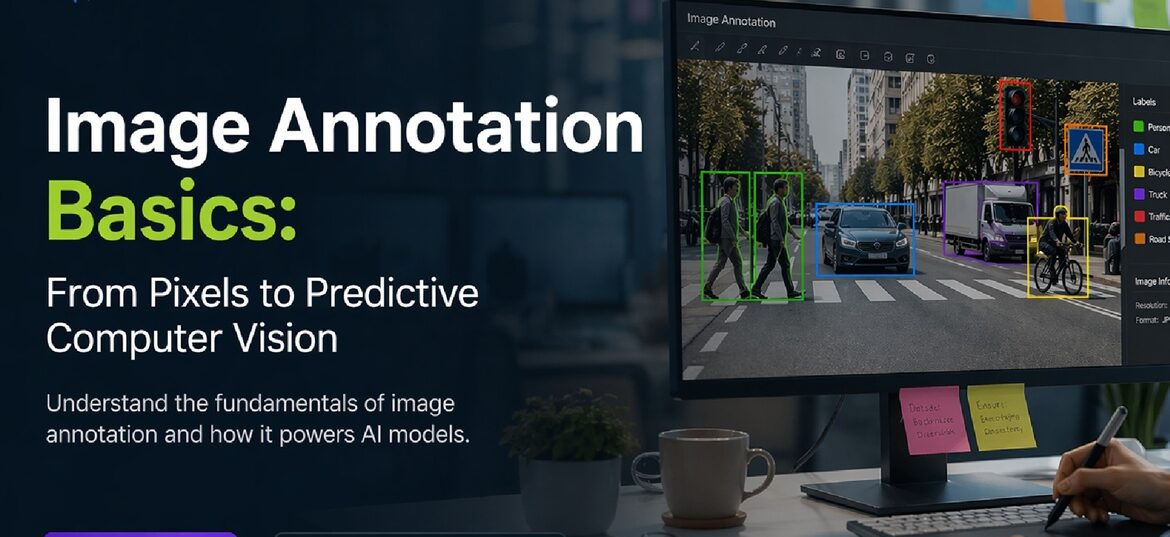
SepA computer can capture millions of pixels in an image, but pixels alone do not tell an AI model what it is looking at. A pedestrian is simply a collection of colors. A damaged crop leaf is another pattern of pixels. A vehicle, medical scan, warehouse package or robotic component has no meaning until the machine learns[…]

02
SepArtificial intelligence can analyze enormous datasets and automate repetitive decisions faster than people. However, speed and scale do not automatically make an AI system reliable. Models can misinterpret unfamiliar inputs, inherit bias from their training data, miss contextual details or produce highly confident but incorrect results. These limitations become particularly important when AI is used in healthcare,[…]

02
SepArtificial intelligence systems are increasingly expected to understand and operate within the physical world. Robots must recognize tools, wearable devices must interpret human activities, and intelligent assistants must understand how people interact with objects in real environments. Traditional images captured from an external viewpoint provide useful information, but they do not always represent what a person or[…]

06
AugData annotation, the process of labeling raw data to make it understandable for machines, is a critical step in developing artificial intelligence (AI) models. It involves assigning meaningful tags or labels to data points, enabling algorithms to recognize patterns, make predictions, and perform specific tasks. This article explores various data annotation techniques used in different AI applications. […]

11
JulThe world faces a multitude of challenges, from eradicating poverty and hunger to ensuring quality education and environmental sustainability. While technology holds immense potential to address these issues, artificial intelligence (AI) often requires a crucial human element: data annotation. This meticulous process of labeling data with relevant information lies at the heart of training AI models for[…]

23
MarIn today’s digital landscape, user experience (UX) is above all. Users crave experiences that are not only functional but also intuitive, personalized, and engaging. Finding the right balance between interesting and easily understandable is what makes a website tick. Artificial intelligence has emerged as a powerful tool for achieving this, but its success hinges on a crucial[…]

20
MarThe rise of artificial intelligence, popularly known as AI, hinges on one crucial element: data. But as data fuels innovation, concerns around data privacy and security in the world of data annotation for AI become paramount. Sensitive information often flows through undetected while annotating data, raising ethical and legal challenges that demand careful consideration. This article delves[…]

06
MarApart from education, artificial intelligence has played a major role in making facial recognition a possibility for the utmost class. Now, not only administrative officials or business personnel but ordinary people can also provide their properties with an extra level of privacy and security with facial recognition tools. In this regard, data annotation has a crucial standing.[…]